
What is Flanders? A Story of European Textile, Tapestry, and Carpet Culture
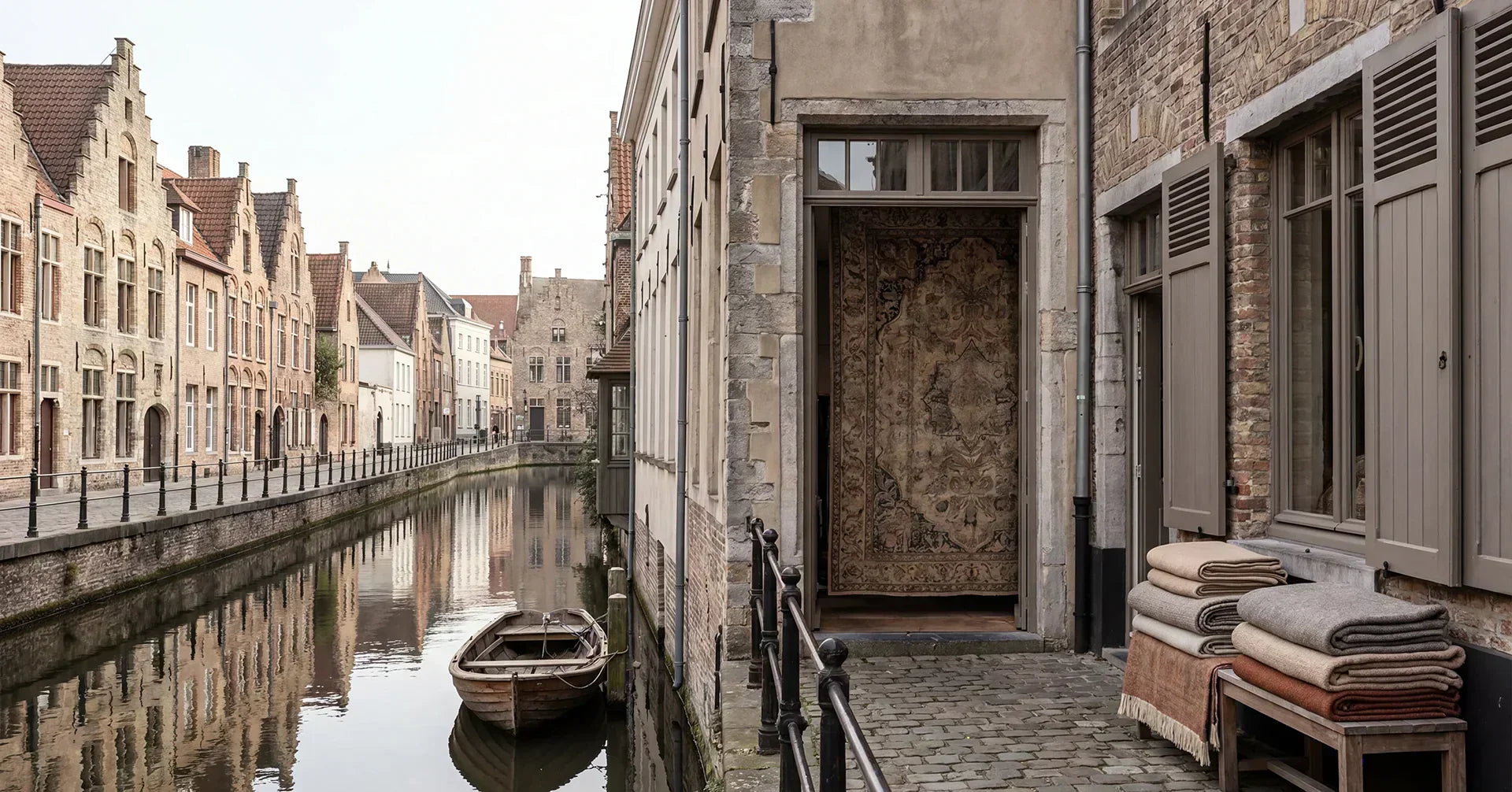
Many people hearing "Flanders rug" for the first time might wonder: What is Flanders? Flanders is a historical and cultural region in what is now northern Belgium. This land in the Low Countries of Europe has been known since the Middle Ages for its woolen textiles, tapestries, fabric trade, and exquisite weaving. For us, "Flanders" is not just a place name, but more like a memory of European textile culture.
Flanders' rise as an important European weaving center was no accident. Located between England, France, the Netherlands, and the Rhine River basin, it enjoyed an excellent trading position; cities like Bruges, Ghent, and Ypres were also important commercial and textile centers in medieval Europe. At that time, high-quality wool from England was transformed into 고급 fabrics and tapestries by merchants and artisans in the Low Countries. Raw materials, ports, city guilds, specialized dyeing and finishing, and artisan skills gradually formed Flanders' deep weaving tradition.
 Conceptual image of a medieval Flemish wool weaving workshop
This textile technology also crossed the sea to influence England. From the late Middle Ages to the early modern period, many weavers from Flanders and the Low Countries migrated to England, bringing mature spinning, dyeing, and weaving techniques to the local area. England, originally famous for exporting wool, gradually developed its own woolen textile industry. Among these, worsted wool, which is a flatter, finer, and more durable worsted wool fabric, is closely related to the history of artisans from the Low Countries moving to England. These technological exchanges provided a mature and stable industrial foundation for the British textile industry and even the 18th-century Industrial Revolution.
From Flemish tapestries to the textile and carpet industries that later developed in England, Belgium, and the Netherlands, we can see a very interesting European textile lineage. Textiles have never been merely practical items; they also carry materials, patterns, colors, craftsmanship, and lifestyle tastes. Tapestries once adorned palaces and castles, while carpets have entered modern homes, becoming the item that can best change the atmosphere in living rooms, bedrooms, and studies.
 Flanders ~ symbolizing our imagination of quality rugs and beautiful homes
"Flanders" for us is not just a romantic European place name, but a standard for quality rugs: emphasizing material selection, weaving craftsmanship, pattern proportions, color layers, and the harmonious relationship between the rug and the space. For us, "Flanders rug" represents more than just a product; it is a textile aesthetic refined by time. A truly good rug is not just a decoration on the floor; it can enhance the ambiance of a space, strengthen family bonds, and make daily life warmer and more tasteful.